If you are looking for bathroom renovation ideas Toronto homeowners can actually justify at resale, here is the short version: a mid-range bathroom in the GTA runs roughly $10,000 to $25,000 or more, the on-site work takes about two to four weeks once demolition begins, and the projects that hold their value are the ones that fix layout and waterproofing first, then spend on finishes that still read as current five years from now. The mistake most people make is chasing a look. The bathrooms that pay you back at sale time are the ones that solve a problem a future buyer can feel in ten seconds: cramped layout, dated tile, a vanity that blocks the door, or a tub nobody uses.
Bathroom Renovation Ideas Toronto Buyers Reward at Resale
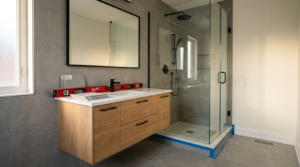
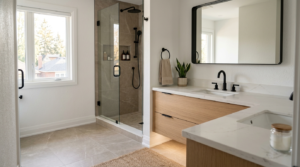
Not every upgrade returns the same money. In a competitive GTA market, the renovations that move a sale price are practical before they are pretty. When we plan bathroom renovation ideas Toronto sellers can lean on, we start with the four things a buyer notices without thinking: a clean, open layout; a walk-in shower with proper glass; a double or wide single vanity with real storage; and lighting that does not make the room feel like a hallway. Get those right and the finishes carry the rest.
According to HomeStars renovation cost data, bathroom projects are among the most consistently recouped interior upgrades in Canadian homes, largely because buyers price a tired bathroom as a job they will have to do themselves. Removing that objection is worth more than an extra accent wall.
The high-value moves
- Convert the tub to a walk-in shower in a main or ensuite bath, especially in homes pitched to downsizers in North York, Thornhill, and Richmond Hill. Keep at least one tub in the house for families with young kids.
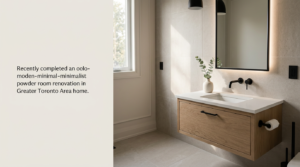
- Replace builder-grade vanities with a wider unit and a quartz top. Quartz reads as current and survives a decade of daily use.
- Heated floors over a basement or slab bathroom. The material cost is modest when the floor is already open, and it is a line every buyer remembers.
- Better light: a window if the wall allows it, plus layered fixtures instead of one builder dome. Dark bathrooms photograph badly and show badly.
Bathroom renovation ideas Toronto sellers should skip
Spending money in the wrong places is how a renovation stops paying for itself. Among the bathroom renovation ideas Toronto homeowners get talked into, the ones that rarely return their cost are oversized soaker tubs nobody fills, fully custom tile mosaics, smart mirrors and gadget fixtures, and anything so specific to your taste that the next owner reads it as a future tear-out. Resale rewards restraint. A clean, well-built room beats a busy one almost every time.
What a Bathroom Renovation Actually Costs in the GTA
Real numbers matter, so here is how the ranges break down across the Toronto market. A straightforward refresh, meaning new vanity, toilet, fixtures, lighting, and paint with the existing layout untouched, typically lands in the $8,000 to $14,000 band. A full mid-range renovation with new tile, a tiled walk-in shower, fresh plumbing fixtures, and a quality vanity usually runs $15,000 to $25,000. Once you move walls, relocate plumbing, add heated floors, or specify high-end stone and glass, $30,000 and up is normal, particularly in an older Etobicoke or downtown Toronto house where what is behind the wall is a surprise.
Three things drive the number more than anything on a showroom shelf: whether you move plumbing, the condition of what is hidden behind the tile, and the size and quality of the tile work itself. Labour, not materials, is where most of the budget goes. That is also why our bathroom renovation services price the scope before the finishes, so you are deciding with a real figure instead of a guess.
Timeline: how long you will be without the room
Plan for two to four weeks of active site work for a typical full bathroom, longer if walls move or tile is intricate. A cosmetic refresh can finish in one to two weeks. Two realities stretch GTA timelines specifically. First, permits and inspections when plumbing or electrical is altered; we handle that filing as part of the work, and the City of Toronto outlines when a building permit is required for plumbing and structural changes. Second, material lead times: custom glass and certain tile orders can add a week or two, which is why ordering before demolition matters.
Condo vs. House: Two Very Different Renovations
Where you live changes the project as much as what you choose. The same scope behaves differently in a Scarborough condo than in a postwar Etobicoke bungalow, and pretending otherwise is how timelines blow up.
If you are in a condo
Condo bathrooms come with a rulebook. Most boards require approval of your scope before work starts, proof of contractor insurance, and adherence to building work-hour restrictions, often weekdays only between set hours. You will likely need to book the service elevator and pay a deposit, and some buildings restrict water shut-offs to specific days. None of this is a dealbreaker, but it adds calendar time, so the planning has to account for it before a single tile comes off. Stacked plumbing also limits how far you can move a toilet or shower drain, which shapes what is realistic.
If you are in an older GTA house
Older houses across Toronto, North York, and Markham hide their own surprises. Galvanized or aged copper supply lines, cast-iron drains, knob-and-tube remnants near the ceiling, and out-of-level floors are common in homes built before the 1980s. The honest approach is to budget a contingency of 10 to 15 percent for what opens up behind the wall. A reputable contractor tells you this before demolition, not after. Industry bodies such as the Canadian Home Builders’ Association publish guidance on working with licensed renovators precisely to help homeowners avoid the underbid jobs that balloon mid-project.
Design-Build: Why One Team Changes the Math
The reason a bathroom renovation goes sideways is usually a handoff. The designer draws something the plumber cannot build, the tile order is wrong, the permit stalls, and you are the one chasing three phone numbers. Design-build removes those seams. At Renoca Design, one team handles the design, the material selections, the permit filing, and the execution, and the whole project sits under a single five-year warranty. That structure is what keeps the quote you approve close to the invoice you pay.
It also makes the smart bathroom renovation ideas Toronto homeowners want easier to actually deliver, because the person designing the walk-in shower is accountable for waterproofing it. If you want to see how that plays out on real GTA projects, our bathroom renovation in Toronto page walks through scope, process, and finished work, and it is the right next step before you commit a budget.
Plan the bathroom as part of the whole house
If the bathroom is one piece of a larger plan, sequence it with the rest. Homeowners often pair a bathroom with a basement renovation services project that adds a three-piece below grade, since the trades and inspections overlap and a finished basement bath runs about four to six weeks on its own. Tackling connected rooms together, the same way a full house renovation services project would, almost always costs less per room than doing them one at a time a year apart.
How to Decide Before You Spend
Run the decision through three questions. First, are you renovating to sell within two years, or to live in the home for a decade? Sellers should spend on the visible, reversible wins and stop there. Long-term owners can justify heated floors, better layout, and quality glass. Second, what is actually behind the wall? In an older house, assume some surprises and budget for them. Third, does the layout work, or are you paying to keep a bad floor plan? Moving a vanity two feet is cheap. Moving the toilet drain is not, and that single decision separates a $15,000 project from a $25,000 one.
The strongest bathroom renovation ideas Toronto homeowners can act on are the boring, durable ones: fix the layout, waterproof properly, light it well, and choose finishes a future buyer will not want to rip out. Get those right and the room pays you back whether you sell next spring or in ten years.
If you are weighing a bathroom project anywhere across the GTA, the practical next step is to put real numbers and a real plan in front of you. Book a free in-home consultation with Renoca Design, and one team will take you from design through permits to execution under a single five-year warranty, so you know what it costs and how long it takes before any tile comes off the wall.
Frequently Asked Questions
Which bathroom renovation ideas toronto homeowners choose actually add resale value?
GTA buyers respond to neutral tile, walk-in glass showers, double vanities, and strong lighting and ventilation. Among the bathroom renovation ideas toronto sellers see returns on, a clean, timeless layout beats trend-heavy finishes. Solid waterproofing and updated plumbing count too, since inspectors and buyers notice them. Budget roughly $10K to $25K or more depending on size and fixtures.
How much does a bathroom renovation cost in Toronto?
Most GTA bathroom renovations run from about $10K for a cosmetic refresh to $25K or more for a full gut with relocated plumbing, custom tile, and higher-end fixtures. Cost depends on size, layout changes, and material grade. A design-build firm sets one fixed scope and price upfront, so you avoid the surprise change-orders that come with separately hired trades.
How long does a bathroom renovation take in the GTA?
A standard GTA bathroom usually takes three to five weeks of on-site work once materials arrive, plus design and planning beforehand. Layout changes, structural work, or custom orders extend that. With a design-build team, one group handles design, permits, and execution, which keeps the schedule tighter than coordinating separate designers and contractors on your own.
Do I need a permit to renovate a bathroom in the GTA?
If you are swapping fixtures and finishes in their existing spots, you usually do not. Moving plumbing, altering walls, or changing the layout generally does require a permit, and requirements vary by municipality. A design-build firm manages the permit process for you and stands behind the finished work under a 5-year warranty.